

Project
-
Rezonance
Year
-
2023–24
Technology
-
Bone conduction + adhesive docking
Type
-
Collaborative Industrial Design
Methodology
-
Design Thinking — Empathize to Test
Prototype cost
-
$8 USD — fully working
Most hearing aids fail the people who need them most — too expensive, too complicated, too easy to break. Rezonance is a response to that gap.
A wireless bone conduction hearing aid designed specifically for elderly users, Rezonance bypasses the ear canal entirely. Instead of clamping to the skull, it attaches via an adhesive docking pad — similar to sports tape — making it more comfortable, more accessible, and usable by a wider population than conventional devices.


Problem Domain
-
Auditory impairment in the elderly.
Methodology
-
Empathize
Define
Ideate
Prototype
Test
Empathize
-
Field study
(Old age home), and personal interviews.

Insights from personal interviews :
-
Field research was conducted through visits to an old age home and personal interviews with elderly users. The findings shaped every design decision that followed.
Key insights:
-
Most users don't admit to having a hearing issue, or accept it as an inevitable part of ageing and don't seek help.
-
Those who want aids are often blocked by a difficult and opaque procurement process.
-
Users who do obtain aids frequently abandon them — the two-part models are irritating to use and the experience isn't good enough to persist with.
-
Most users said they would use a hearing aid if it were a single-unit device.
-
Cost is the single largest barrier to accessing newer, better models.
-
Most market-available aids use proprietary batteries and require expert calibration
-
locking users out of their own devices.
-
Interfaces on mainstream aids are too easy to accidentally interact with, causing settings configured by medical professionals to be inadvertently changed.

Ideate


Concept :
-
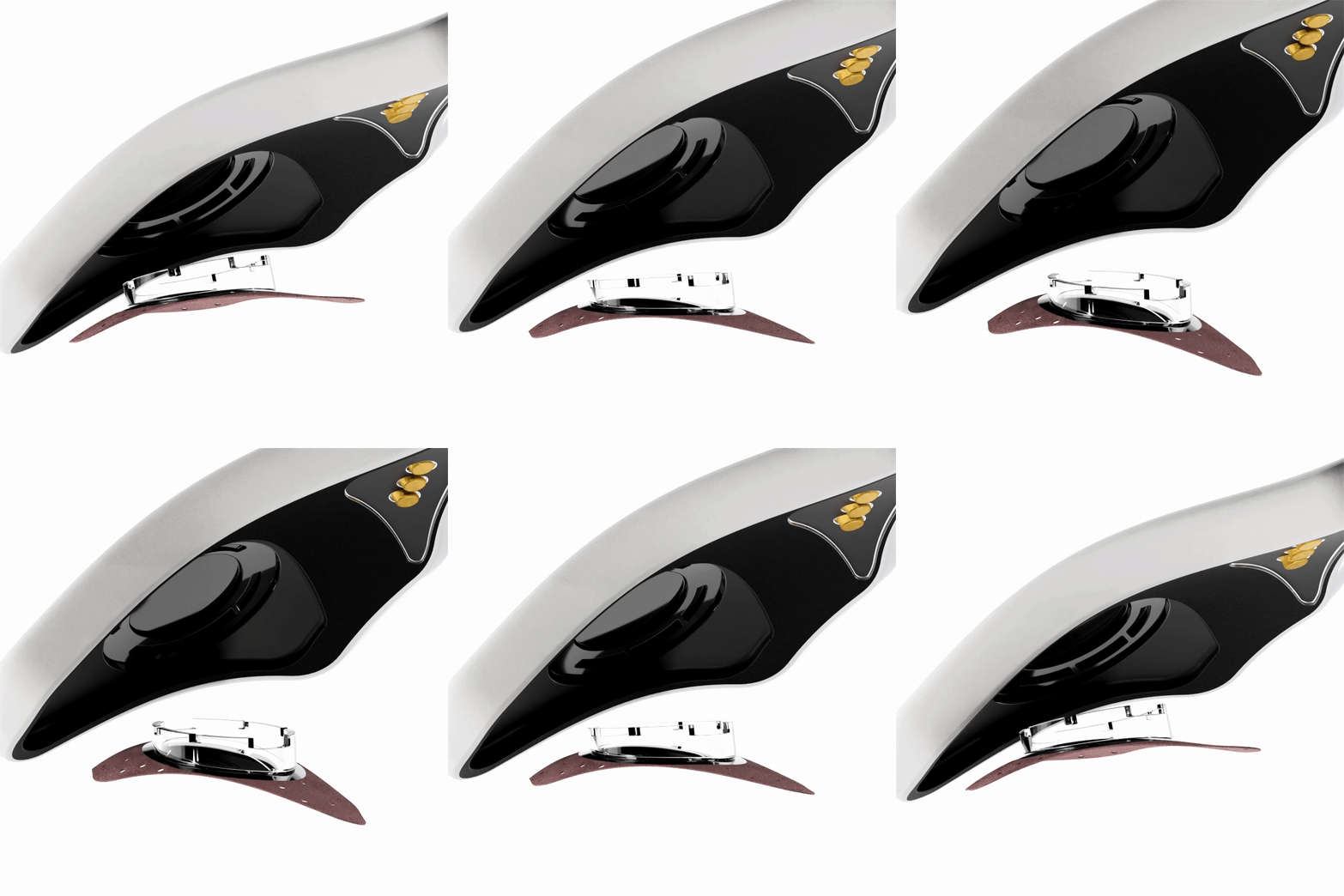
The adhesive docking pad is the core innovation. By replacing the clamping force required in conventional bone conduction devices, the pad — which has properties similar to waterproof, reusable sports tape — allows the device to sit flush against the bone without pressure or discomfort.
This opens the technology to users who find clamping devices physically uncomfortable, and removes the need for fitting by a specialist.

To bypass the requirement of a clamping force for a bone-conduction audio transmission medium, an adhesive docking pad is used. The adhesive pad has properties similar to sports tape and can be waterproof and reusable.


Prototype
-
The working prototype A fully functional prototype was built for $8 USD — proving that the core technology is achievable without the cost structures that currently make hearing aids inaccessible to most people.
Components: 500mAh 3.7V LiPo battery, TP4056 charging module, electret condenser microphone, PAM8403 audio amplifier, Bluetooth stereo module, 1.5–3V drone motor, 35mm piezoelectric transducer.





Rezonance demonstrates that the gap between a real user problem and a working design solution doesn't require a large budget — it requires the right research, the right process, and the willingness to build something real.
A collaborative project with Nikhil Srikrishnan and Riddhiman Dutta Choudhury.